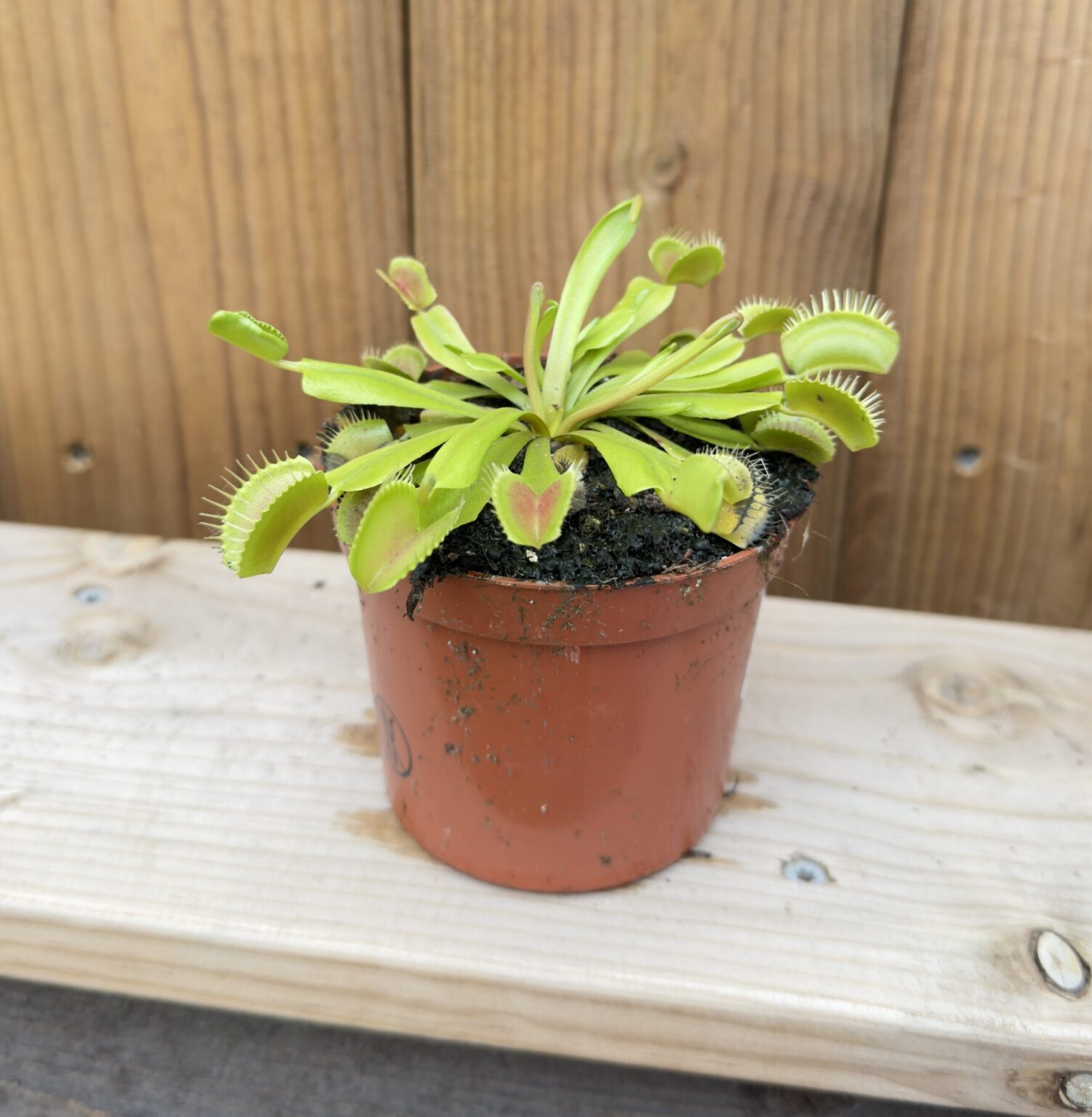
Venus flytrap (Dionaea muscipula), 9 cm pot
Seller: ALLIKASILM
About this product
Venus flytrap (Dionaea muscipula) is the best-known carnivorous plant, whose hinged leaf traps snap shut to catch insects and flies.
The trap closes when an insect touches two trigger hairs in succession. The plant forms a rosette 10–15 cm across, flowers in spring with white blooms on a tall stalk and suits a sunny windowsill or terrarium.
It needs bright light, rainwater and a nutrient-poor peat mix, plus a cool winter rest period. You do not need to feed it insects, as indoors it usually catches its own.
Specifications
- Rosette size: 10–15 cm
- Light: bright, at least 4 hours of direct sun
- Soil: nutrient-poor peat with perlite or sand
- Water: rainwater or distilled water, kept in a saucer
- Temperature: 18–28 °C in the growing season
- Dormancy: November–February, 2–10 °C, frost-free
- Feeding: no fertiliser
- Origin: coastal bogs of North and South Carolina, USA
Advice from our agronomist
Planting. Pot the plant in a nutrient-poor mix of peat and perlite (or sand), not ordinary potting compost. Use a plastic rather than clay pot and place it on a bright south or east windowsill.
Care. Remove blackened traps and flower stalks, as flowering exhausts the plant. Do not trigger the traps with a finger, because each closing costs the plant energy.
Watering and feeding. Keep the mix constantly moist using rainwater or distilled water; tap water and fertiliser harm the roots. In the growing season stand the pot in a saucer with 1–2 cm of water.
Winter and pruning. In winter a dormancy period is needed: keep the plant from November to February in a bright cool place at 2–10 °C without frost. Repot in spring when new growth starts.
Codes and attributes
| Size | 9 cm pot |
|---|---|
| Category | Houseplants |
Delivery and timing
- Parcel locker — €2.99–3.99, free from 59,00 €
- Courier to the door — €7.99–8.99, free from 99,00 €
- Dispatched within 2 working days