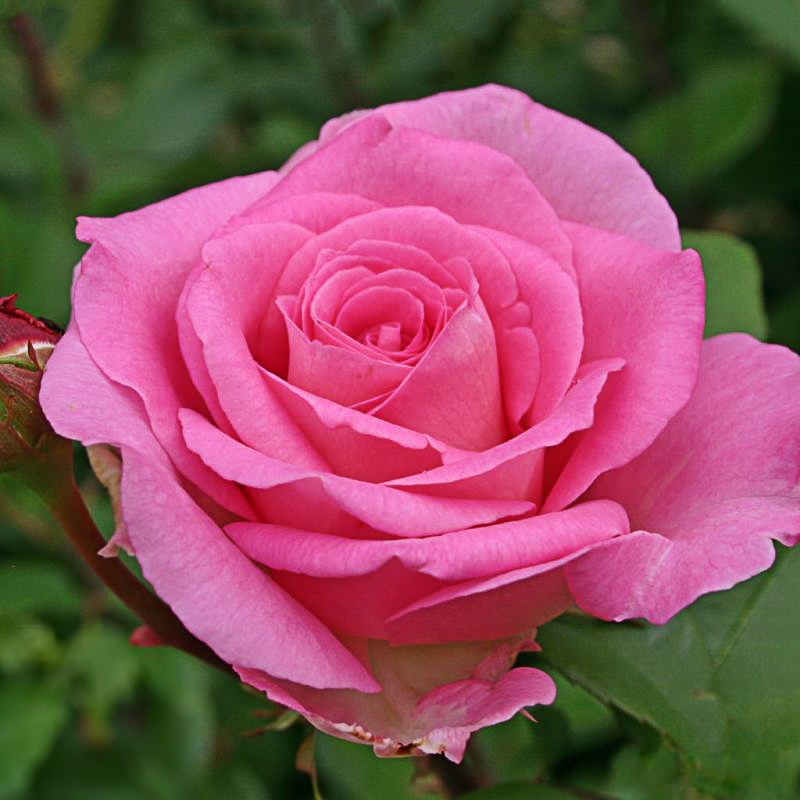
Rosa "Beverly"
Seller: ALLIKASILM
About this product
The hybrid tea Rosa 'Beverly' is a German variety from W. Kordes' Söhne (bred by Wilhelm Kordes III), introduced in 2007 in the Eleganza® series. It is one of the most fragrant modern roses. Buy Rosa 'Beverly' in Estonia from the ALLIKASILM nursery as a potted rose plant.
The blooms are clear pink with a silvery sheen, of classic high-centred form, very double with 50–55 petals and 8–10 cm across. Its greatest asset is a strong fruity, citrus fragrance that fills the garden. The rose repeat-flowers in flushes all summer until the frosts.
The bush is sturdy, usually 100–140 cm tall and 70–110 cm wide. The variety is highly resistant to black spot and resistant to powdery mildew. Hardiness is USDA 5b (to −26 °C), so it overwinters reliably in Estonia with the base mounded. Ideal for cutting, rose beds and planting near a seating area where the scent can be enjoyed.
Specifications
- Type: hybrid tea rose, repeat-flowering
- Botanical name: Rosa 'Beverly' (KORpauvio)
- Breeder: W. Kordes' Söhne, Germany, 2007
- Height and spread: 100–140 cm / 70–110 cm
- Flowering: June–September, repeat; 8–10 cm pink, very double blooms (50–55 petals)
- Fragrance: strong, fruity-citrus
- Light: full sun
- Soil: fertile, loose, loamy, well-drained
- Hardiness: USDA 5b (to −26 °C); mound the base for winter in Estonia
- Disease resistance: very good against black spot, good against powdery mildew
- Use: rose beds, cut flowers, scented garden
- Size: potted rose plant
Advice from our agronomist
Planting. Choose a sunny, airy spot (at least 6 hours of sun a day) with fertile, loose, loamy soil that never stays waterlogged, pH 6–7. Dig a hole about 50×50 cm and add compost or well-rotted manure at the bottom. Set the graft union 3–5 cm below soil level – in the Estonian climate this protects it in winter. A potted plant can be planted throughout the season, from May to September; space plants 60–70 cm apart.
Watering and feeding. Water deeply but not too often – 10–15 l per plant once a week, more often in hot weather, ideally in the morning and at the base without wetting the leaves. In spring give a nitrogen-rich or complete rose fertiliser, again a complete feed when the buds form and after the first flush, and from mid-July only potassium-phosphorus feed without nitrogen so the shoots ripen before winter.
Care. In spring, as the buds swell, remove frost-damaged and thin shoots and cut strong ones back to 4–6 buds. In summer deadhead to the first five-leaflet leaf so 'Beverly' produces new buds sooner. For winter, once light frosts have set in (around −5 °C, usually late October–November), mound dry soil or compost 20–25 cm high around the base and cover with spruce branches or horticultural fleece; remove the cover gradually in April.
Gardener's tip. The scent of 'Beverly' is strongest in the morning and in warm, humid weather – plant it by a path, terrace or bench. For the vase, cut the blooms as half-open buds.
Codes and attributes
| Category | Roses |
|---|
Delivery and timing
- Parcel locker — €2.99–3.99, free from 59,00 €
- Courier to the door — €7.99–8.99, free from 99,00 €
- Dispatched within 2 working days