Overwatered houseplants: how to tell and how to save them
Yellow lower leaves, sour-smelling soil and a heavy pot mean overwatering, not drought. How to tell the difference, what to do with the roots and how to water so it never happens again.
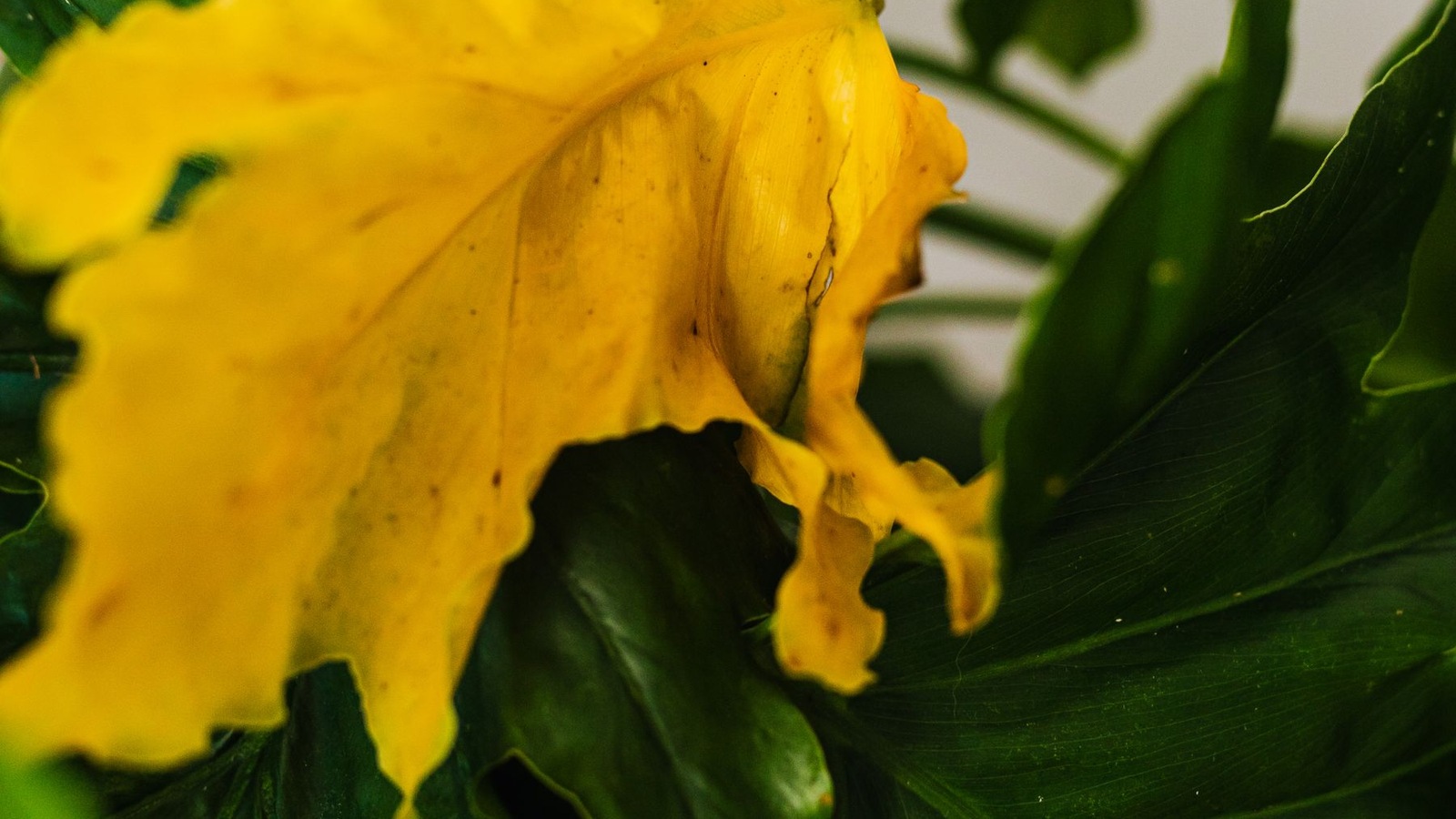
Most houseplants die in autumn and winter not from drought but from overwatering: the plant slows down and uses little water, yet it gets watered on the summer schedule. The main sign is lower leaves turning yellow and soft while the soil stays wet for weeks. The cure is to stop watering, and if the soil smells of rot, to repot into dry mix after cutting away the dark roots.
Three signs of overwatering
- Lower leaves turn yellow and soft. In drought a leaf dries from the edges and crackles; when overwatered it is limp, yellow from the base, sometimes with brown watery patches. The plant may look “wilted”, as if thirsty – and gets watered again
- The soil smells sour or like a cellar, with a white or green film on top. Roots without air begin to rot and bacteria produce the smell. Healthy moist soil smells of forest
- The pot is still heavy a week after watering. If the soil isn’t drying, nobody is drinking: the roots have stopped working
Extra clues: gnats over the pot (fungus gnats live only in permanently wet soil), a soft stem base on succulents, green leaves dropping from a ficus.
Why it happens in autumn
From October there is three to four times less light in Estonia than in summer, so the plant photosynthesises and transpires less. Its need for water drops two- to threefold, but the owner’s schedule stays the same. Add the heating coming on: the top layer dries fast while the inside of the pot stays wet – a finger one centimetre deep is misleading.
What to do: three scenarios
1. Soil wet, no smell, leaves only just yellowing. Simply stop watering. Move the pot to light and warmth, if possible onto folded newspaper or a towel that draws excess water out through the drainage hole. Water next when the soil is dry two fingers deep (3–4 cm), for succulents completely dry.
2. Soil smells, plant is limp. Take it out of the pot and shake off the wet soil. Healthy roots are white or light brown and springy; rotten ones are dark and soft, with skin that slides off. Cut away everything dark with clean scissors back to healthy tissue. Plant into fresh dry mix with added perlite (a third of the volume) in a pot sized to the remaining roots – often smaller than before. Don’t water for 3–5 days, then a little at a time.
3. Almost no roots left, stem soft at the base. The plant can’t be saved, but you can take cuttings from the top: pothos, philodendron, tradescantia, peperomia and begonia root in water within 2–4 weeks.
How to water so it doesn’t happen again
- Finger in the soil first, then the can. Water by dryness, not by the day of the week
- A drainage hole is a must. A cachepot without a hole is for the outside only, with an inner pot
- Water in the saucer – 20 minutes at most. Then pour it off
- In winter two to three times less often: succulents every 3–4 weeks, sansevieria and zamioculcas every 2–3 weeks, monstera and pothos every 7–10 days, calathea and ferns every 5–7 days without standing water
- The mix must breathe. Add perlite or bark to shop-bought universal compost so water doesn’t sit
What not to do
- Don’t “dry out” an overwatered plant on the radiator – the roots cook
- Don’t feed a sick plant: fertiliser on rotten roots finishes it off
- Don’t repot into a pot “to grow into”: spare soil without roots turns sour
- Don’t water by schedule and don’t leave automatic watering unsupervised for winter
Frequently asked questions
How do I tell overwatering from drought if the plant wilts in both cases?
Feel the soil 3–4 cm down and lift the pot. Dry, light soil – drought, water it. Wet, heavy soil with limp leaves – overwatering, do not water.
Can a plant be saved if half the roots have rotted?
Yes. Cut away everything dark, plant in dry mix with perlite in a smaller pot and don’t water for 3–5 days. Most vines, begonias and peperomias recover within a month.
Where do the gnats over the pot come from and what to do?
Fungus gnats live in permanently wet soil. Let the soil dry 3–4 cm between waterings and top it with a centimetre of dry sand – the gnats vanish within two to three weeks.
Should I change the soil after overwatering if there is no smell?
No. Just let the soil dry and water by dryness from now on. Change the soil only if it smells of rot or has mould on top.
From our catalogue
Plants that forgive a forgotten watering are in the houseplants section; their fertilisers are under houseplant fertilisers.